
What Happens Inside Your Chimney When It’s Not Being Used? | Chimney Maintenance Guide
What Happens Inside Your Chimney When It’s Not Being Used? Seasonal Buildup, Nesting, and Structural Risks Explained
Why an Unused Chimney Still Needs Attention
Many homeowners assume that if their fireplace isn't being used, their chimney doesn't require maintenance. Unfortunately, the opposite is often true. Even when a chimney sits idle, it remains exposed to the elements year-round. Seasonal buildup, animal nesting, moisture intrusion, and structural deterioration can all occur without visible warning signs.
Understanding what happens inside your chimney when it's not in use can help you prevent costly repairs, improve home safety, and extend the lifespan of your chimney system.
Seasonal Debris Accumulates Inside the Chimney
An unused chimney acts like an open pathway to the outdoors. Throughout the year, various materials can find their way inside.
Common Seasonal Debris Includes:
Leaves and twigs
Pine needles
Dust and dirt
Small branches
Windblown debris
During fall and winter, debris accumulation can increase significantly, especially if your chimney lacks a properly installed chimney cap. Over time, these materials can create blockages that restrict airflow and increase the risk of odors, moisture retention, and future chimney fires when the fireplace is eventually used.
Birds and Animals Often See Chimneys as Shelter
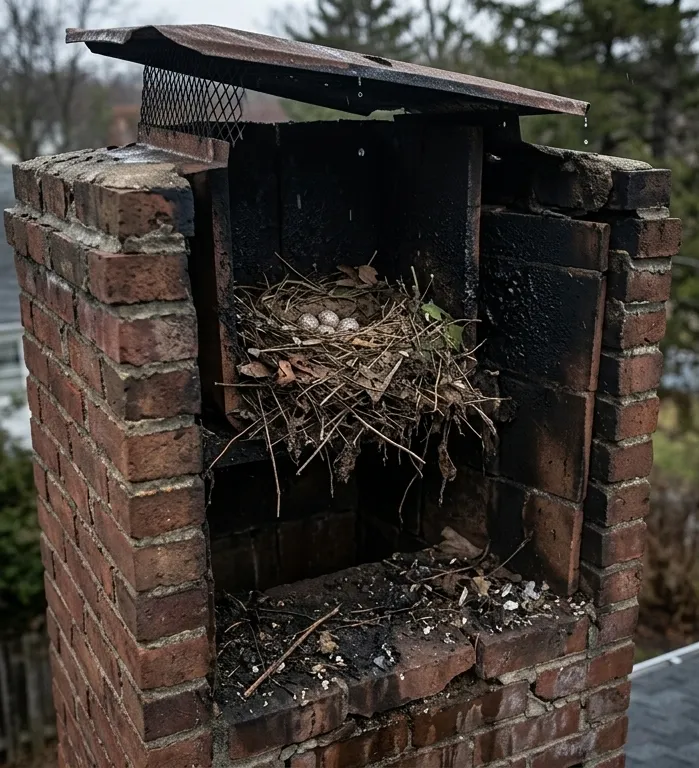
One of the most common issues with unused chimneys is animal nesting.
Animals Frequently Found in Chimneys:
Birds
Squirrels
Raccoons
Bats
Rodents
To these animals, a chimney resembles a safe, enclosed habitat protected from predators and harsh weather conditions. Birds, in particular, often build nests during spring and early summer.
Nesting materials can block the flue, reduce ventilation, and create fire hazards. Additionally, animals may leave behind droppings, parasites, odors, and debris that can impact indoor air quality.
Moisture Damage Continues Year-Round
Even if a fireplace remains unused, moisture remains one of the biggest threats to chimney health.
How Moisture Enters a Chimney:
Rainwater through an uncapped chimney
Cracked masonry
Damaged flashing
Deteriorated chimney crowns
Condensation inside the flue
Once moisture enters the system, it can begin damaging bricks, mortar joints, liners, and metal components. Freeze-thaw cycles during colder months can accelerate deterioration, causing cracks to expand and structural weaknesses to develop.
Creosote Can Still Cause Problems
If your fireplace was used previously, existing creosote deposits may remain inside the flue.
Creosote is a highly combustible byproduct created when wood burns. While it may seem harmless when the fireplace is inactive, creosote can absorb moisture and contribute to unpleasant odors throughout the home.
When the fireplace is eventually used again, old creosote deposits can become a significant fire hazard if they have not been professionally removed.
Hidden Structural Damage Can Go Unnoticed
Unused chimneys often develop problems that homeowners don't discover until extensive damage has occurred.
Common Structural Issues Include:
Cracked bricks
Missing mortar joints
Leaning chimney structures
Damaged chimney crowns
Flue liner deterioration
Water-damaged masonry
Because these problems usually develop gradually, they may not become visible until costly repairs are required. Routine inspections can identify early warning signs before major structural failures occur.
Mold and Mildew Growth May Develop
Moisture combined with poor ventilation creates ideal conditions for mold and mildew growth inside an unused chimney.
Signs of chimney-related mold issues may include:
Musty odors
Increased indoor humidity
Stains near the fireplace
Respiratory irritation
Mold growth can spread beyond the chimney system and affect surrounding walls, ceilings, and living spaces if left untreated.
Why Annual Chimney Inspections Are Still Important
Many homeowners mistakenly believe chimney inspections are only necessary for active fireplaces. In reality, annual inspections are recommended regardless of how often the fireplace is used.
A professional chimney inspection can help identify:
Animal nests
Water intrusion
Structural deterioration
Creosote buildup
Chimney cap damage
Ventilation issues
Early detection often results in simpler, less expensive repairs and helps maintain the safety and efficiency of your home's chimney system.
Preventive Maintenance Tips for Unused Chimneys
To protect your chimney while it's not in use:
✔ Install a quality chimney cap
✔ Schedule annual chimney inspections
✔ Remove debris regularly
✔ Address masonry cracks promptly
✔ Repair damaged flashing or crowns
✔ Ensure proper waterproofing protection
✔ Monitor for unusual odors or moisture signs
These simple maintenance steps can significantly reduce the risk of costly future repairs.
Final Thoughts
Just because your fireplace isn't being used doesn't mean your chimney is problem-free. Seasonal debris accumulation, animal nesting, moisture intrusion, mold growth, and structural deterioration can all occur while a chimney sits idle. Regular inspections and preventive maintenance help protect your home, preserve your chimney's integrity, and prevent unexpected repair expenses.
If your chimney hasn't been inspected recently, now is the perfect time to schedule a professional evaluation and ensure it's ready for the seasons ahead.