
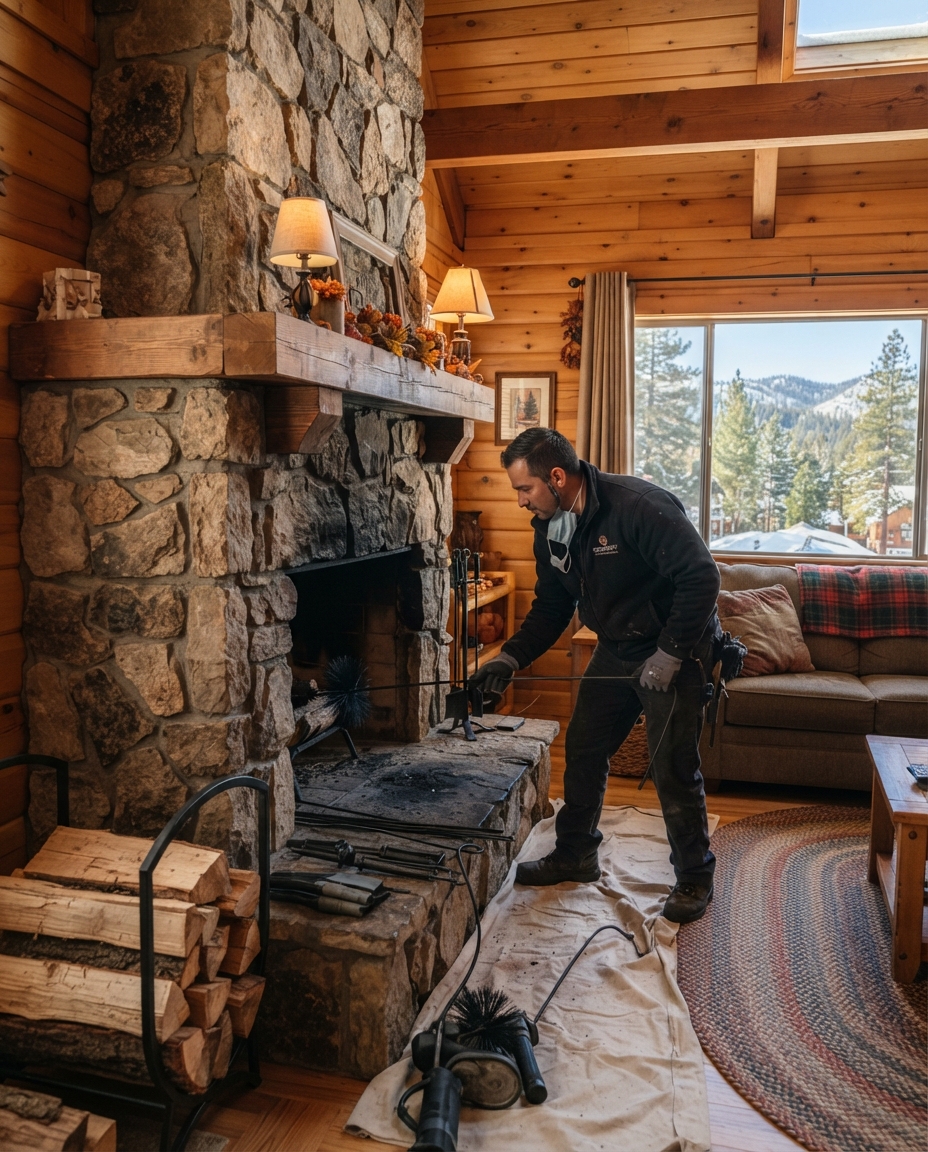
Preparing Vacation Cabins for Fireplace Season | Chimney Care
Preparing Vacation Cabins for Fireplace Season
Seasonal Homes Deserve the Same Chimney Care as Primary Residences
A vacation cabin can be the perfect place to enjoy cool-weather evenings, especially when there's a fireplace to bring warmth and comfort to the space. But if the property sits unused for weeks or months at a time, its chimney can still be exposed to moisture, debris, animals, and other conditions that may affect its condition.
Before returning to a seasonal property for fireplace season, make chimney maintenance part of your preparation checklist. A professional inspection and cleaning can help identify potential concerns before you plan that first fire.
Why Vacation Cabins Need Chimney Care
A chimney doesn't stop aging simply because a cabin isn't occupied.
While a seasonal property may have less fireplace use than a primary residence, the chimney remains exposed to:
Rain and moisture
Wind
Temperature changes
Leaves and debris
Animal activity
Exterior weather conditions
Regular inspections can help identify changes that may have occurred while the property was vacant.
Inspect Before Your First Fire
One of the most important steps before using a cabin fireplace is making sure the chimney is in appropriate condition.
A professional chimney inspection can help evaluate accessible components and identify issues such as:
Masonry deterioration
Damaged chimney caps
Obstructions
Signs of animal activity
Visible moisture damage
Other maintenance concerns
The appropriate level of inspection depends on the chimney system and its condition.
Check for Signs of Animal Activity
Seasonal cabins can provide attractive shelter for birds and other animals when no one is around.
A damaged chimney cap or opening may allow animals to enter and build nests or leave debris behind.
Before fireplace use resumes, watch for signs such as:
Unusual odors
Scratching or movement sounds
Nesting materials
Debris falling into the fireplace
Evidence of animals around the chimney
If you suspect an animal or nest is inside the chimney, have the situation evaluated before using the fireplace.
Moisture Can Affect an Unoccupied Cabin
Cabins in mountain and forested environments can experience significant exposure to rain, snow, ice, and temperature fluctuations.
Over time, moisture can contribute to deterioration of:
Brick
Mortar
Flashing
Chimney caps
Other exterior components
A professional inspection can help identify visible signs of weather-related deterioration.
Don't Overlook the Chimney Cap
A chimney cap plays an important role in protecting the chimney opening.
Before fireplace season, make sure the cap appears intact and properly positioned. Damage can allow moisture, debris, or animals to enter the chimney.
If you notice a damaged or missing cap, arrange for professional evaluation before using the fireplace.
Schedule a Chimney Sweep When Needed
Even seasonal fireplaces can accumulate soot and creosote when they are used.
How often a chimney needs cleaning depends on factors such as frequency of use, fuel type, and the condition of the chimney.
A professional chimney sweep can help determine whether cleaning is necessary before the fireplace is used again.
Vacation Properties May Be Harder to Monitor
One challenge with seasonal homes is that problems can go unnoticed for long periods.
A primary residence receives regular attention, but a vacation cabin may sit empty between visits.
That makes scheduled maintenance particularly valuable.
Before the start of fireplace season, consider arranging an inspection even if you haven't noticed an obvious problem.
Prepare Before Guests Arrive
If your cabin is used by family, friends, or vacation renters, fireplace preparation becomes even more important.
Guests may assume the fireplace is ready to use when they arrive. Completing appropriate maintenance ahead of time can help ensure that the fireplace and chimney have been evaluated before the property becomes occupied.
For rental properties, include chimney maintenance in your broader seasonal property-management plan.
Include the Exterior in Your Inspection
Chimney maintenance shouldn't focus exclusively on the flue.
Take a look at the exterior for visible signs of:
Cracked masonry
Deteriorating mortar
Damaged flashing
Loose components
Water stains
Vegetation growing near the structure
If you notice something unusual, have it evaluated by a qualified professional.
Don't Wait Until the Cabin Is Booked
The beginning of fireplace season can be a busy period for chimney professionals.
Waiting until your first cabin weekend—or until guests have already arrived—can leave little time to address unexpected maintenance needs.
Scheduling service before the season gets busy gives you more time to handle repairs or cleaning if they're recommended.
Create a Seasonal Cabin Checklist
Before fireplace season begins, consider adding these tasks to your cabin maintenance list:
Schedule a professional chimney inspection when appropriate.
Arrange chimney cleaning if needed.
Check the chimney cap for visible damage.
Look for signs of animal activity.
Inspect accessible exterior masonry.
Check for visible moisture concerns.
Address previously identified repairs.
Confirm the fireplace is ready before regular use.
This simple checklist can help prevent chimney care from being overlooked during seasonal property preparation.
Final Thoughts
Vacation cabins may spend much of the year unoccupied, but their chimneys remain exposed to the elements. Moisture, debris, animals, and normal deterioration can affect a chimney whether the fireplace is used every day or only a few times each season.
Before the first cool-weather fire, schedule appropriate chimney inspection and cleaning services to help identify potential concerns and prepare the fireplace for seasonal use.
Whether it's your personal retreat or a rental cabin, regular chimney care is an important part of responsible property maintenance.
Prepare the cabin, inspect the chimney, and make fireplace season part of your seasonal maintenance plan.