
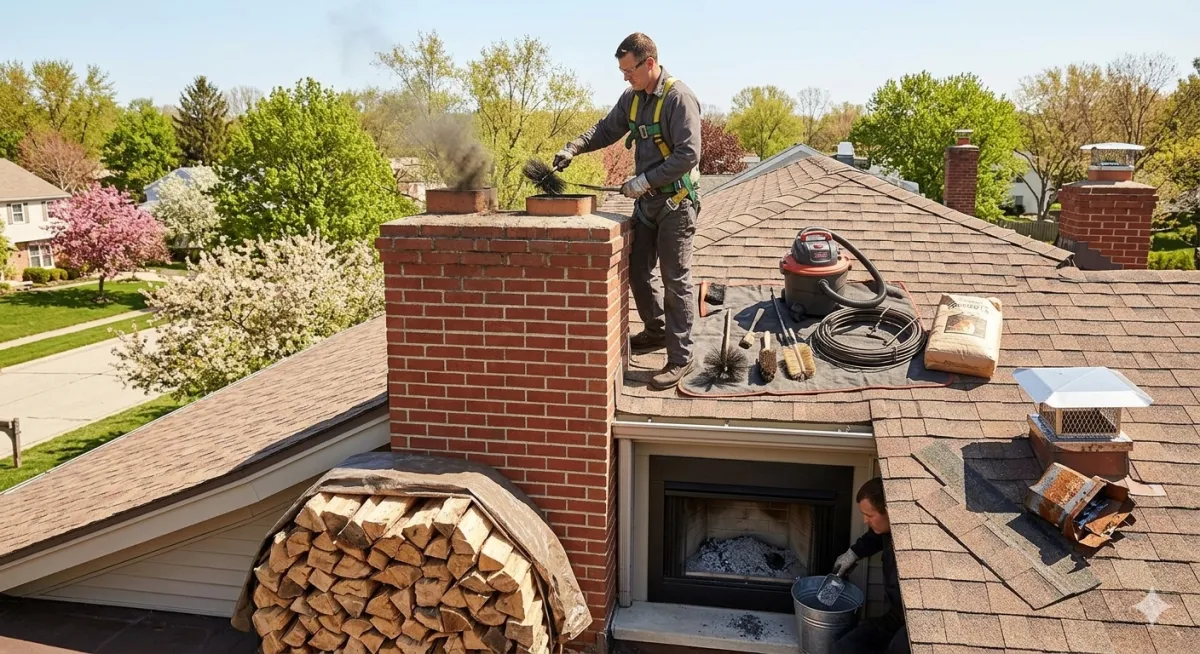
Post-Heating Season Chimney Care: What Homeowners Should Do Now
Post-Heating Season Chimney Care: What Homeowners Should Do Now
When winter ends and your fireplace goes quiet, it’s easy to forget about your chimney until the next cold season. But the period right after heavy use is actually the most important time for chimney care.
This post-heating season is when hidden issues like creosote buildup, moisture damage, and blockages start to develop quietly. Taking action now helps protect your home, improve safety, and reduce costly repairs later.
Below is a simple, step-by-step guide for homeowners to properly care for their chimney after winter use ends.
Step 1: Stop Using the Fireplace Completely
Once the heating season is over, avoid using your fireplace unless absolutely necessary. Continued use during warmer months can:
Add more creosote buildup
Trap additional soot inside the flue
Mask early warning signs of damage
This is the best time to transition from usage to maintenance mode.
Step 2: Schedule a Professional Chimney Inspection
A post-winter inspection is essential. After months of heavy use, even a well-maintained chimney can develop issues.
A professional inspection typically checks for:
Creosote buildup levels
Cracks in the flue or masonry
Moisture intrusion
Blockages from debris or nests
Damaged chimney caps or dampers
Catching problems early helps prevent expensive repairs later in the year.
Step 3: Clean Out Ash and Residue
Even after the fire has stopped, ash and soot remain inside the firebox and sometimes the lower chimney area.
Carefully removing these helps:
Reduce odor buildup during summer
Prevent corrosion or staining
Improve overall indoor air quality
If there’s a significant amount of residue, it’s better handled through a professional sweep.
Step 4: Check for Creosote Buildup
Creosote is one of the most dangerous byproducts of burning wood. After winter use, it often sticks to chimney walls in layers.
Why it matters:
It is highly flammable
It hardens over time, making it harder to remove
It can produce strong, smoky odors in warm weather
A certified chimney sweep can safely remove it before it becomes a hazard.
Step 5: Inspect the Chimney Cap and Crown
Your chimney cap and crown protect your home from rain, animals, and debris.
After winter, check for:
Rust or corrosion on the cap
Cracks in the crown (top cement layer)
Loose or missing protective mesh
Damage here can quickly lead to water leaks and pest problems during summer.
Step 6: Watch for Moisture Problems
Spring and summer humidity can worsen any winter damage. Moisture inside a chimney can lead to:
Mold and mildew growth
Brick deterioration
Rust in metal components
If you notice damp odors or stains near the fireplace, schedule repairs immediately.
Step 7: Seal and Protect the Fireplace for Summer
Once cleaned and inspected, prepare your fireplace for long-term inactivity:
Close the damper (if appropriate)
Install a chimney balloon or draft stopper if needed
Ensure the chimney cap is secure
Keep the firebox clean and dry
This helps prevent drafts, odors, and pest entry during the off-season.
Step 8: Schedule Preventive Maintenance for Next Season
Don’t wait until fall to think about your chimney again. Post-season is the best time to plan ahead.
Benefits of early maintenance scheduling:
Easier appointment availability
Lower risk of emergency repairs
Peace of mind before winter returns
Final Thoughts
Post-heating season chimney care is not just about cleaning—it’s about protecting your home while your fireplace is unused for months.
By taking a few proactive steps after winter ends, you can avoid fire hazards, reduce repair costs, and ensure your chimney is ready when you need it again.