
How Unused Chimneys Can Still Become a Home Safety Risk in Summer
How Unused Chimneys Can Still Become a Home Safety Risk in Summer
When summer arrives, many homeowners stop thinking about their fireplaces and chimneys until colder weather returns. However, an unused chimney can still pose serious home safety risks during the warmer months. Inactivity combined with heat, humidity, rain, and pests can lead to hidden chimney problems that become expensive and dangerous if ignored.
From moisture damage and animal infestations to hidden creosote buildup, your chimney system still requires maintenance even when it’s not in use. Understanding these off-season risks can help homeowners protect their property, improve indoor air quality, and prepare their fireplace system for the next heating season.
Why Chimneys Still Matter During Summer
Many homeowners assume chimneys only need attention during winter, but warm weather actually creates a different set of challenges. Summer heat and humidity interact with leftover soot, ash, and creosote inside the chimney, increasing the risk of odors, corrosion, and structural damage.
An unused chimney can also become an entry point for moisture, insects, birds, and small animals if it is not properly maintained.
Ignoring your chimney during the off-season may lead to:
Water leaks and masonry damage
Mold and mildew growth
Unpleasant odors inside the home
Pest infestations
Poor indoor air quality
Structural deterioration
Increased repair costs
Routine chimney maintenance helps prevent these issues before they worsen.
Moisture Damage Is One of the Biggest Summer Chimney Risks
Moisture is often considered the number one enemy of chimney systems. Summer storms, humidity, and condensation can introduce water into the chimney structure, especially if the chimney cap or flashing is damaged.
Over time, excess moisture can cause:
Cracked bricks and mortar joints
Rusted dampers and metal components
Mold and mildew growth
Interior wall stains
Chimney liner deterioration
Masonry chimneys are particularly vulnerable because brick and mortar naturally absorb water. Repeated exposure to moisture and changing temperatures can weaken the entire chimney structure.
Signs of Moisture Problems
Watch for these warning signs during summer:
Musty odors near the fireplace
White staining on bricks (efflorescence)
Peeling paint near the chimney
Rust on fireplace parts
Water stains on ceilings or walls
Dampness inside the firebox
Addressing water issues early can prevent major structural repairs later.
Creosote Buildup Can Still Cause Problems
Even though the fireplace is no longer active, leftover creosote from winter fires does not disappear. Creosote is a highly flammable byproduct that sticks to chimney walls during fireplace use.
During summer, humidity can mix with creosote residue and create strong smoky or acidic odors that spread throughout the home. In some cases, creosote can also contribute to chimney corrosion if left untreated for long periods.
Professional chimney cleaning at the end of the heating season helps eliminate buildup and reduce off-season odor problems.
Unused Chimneys Attract Pests and Animals
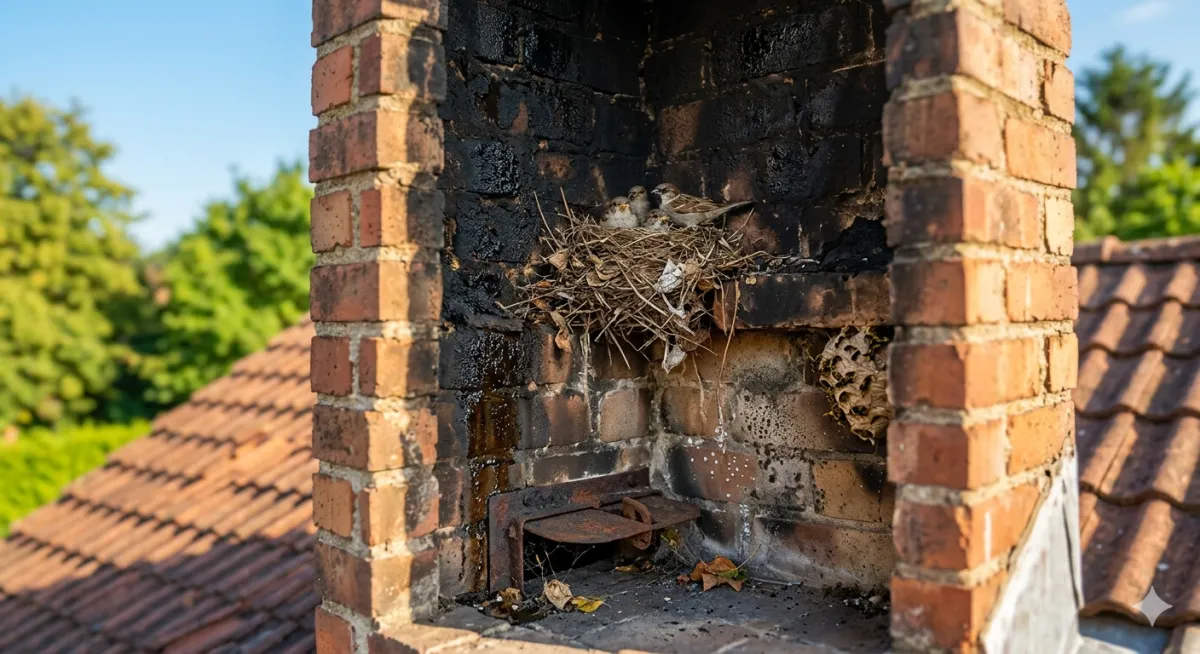
An open or damaged chimney creates the perfect shelter for animals seeking warmth, nesting space, or protection from weather. Birds, squirrels, raccoons, bats, and insects commonly enter chimneys during spring and summer.
Animal intrusions can lead to:
Blocked chimney flues
Foul odors
Parasites and bacteria
Noise disturbances
Fire hazards from nesting materials
Bird nests are especially common during warmer months and can restrict proper ventilation if not removed.
How to Prevent Chimney Pest Problems
To reduce the risk of infestations:
Install a quality chimney cap with mesh screening
Seal cracks and openings
Trim nearby tree branches
Schedule seasonal chimney inspections
Preventive maintenance is far easier and less expensive than removing an animal infestation later.
Hidden Structural Damage Can Worsen During Inactivity
Small chimney issues often go unnoticed during summer because the fireplace is not actively being used. Unfortunately, minor damage can quickly worsen when exposed to rain, heat, and humidity for several months.
Common hidden chimney issues include:
Cracked flue liners
Loose chimney flashing
Damaged crowns
Deteriorating mortar joints
Interior chimney blockages
Without regular inspections, homeowners may not discover these problems until winter when the fireplace is needed again.
Poor Indoor Air Quality from Unused Chimneys
Unused chimneys can negatively impact indoor air quality during warmer months. Humid air flowing through dirty chimney systems can carry unpleasant odors, allergens, mold spores, and airborne particles into the home.
If your home smells smoky, musty, or stale during summer, the chimney could be the source.
Keeping the chimney clean and properly sealed helps maintain healthier indoor air quality throughout the year.
Summer Chimney Safety Tips for Homeowners
Protect your home and chimney system during the off-season with these simple maintenance tips:
Schedule a Professional Chimney Inspection
Annual inspections help identify hidden problems before they become serious safety hazards.
Clean the Fireplace and Firebox
Remove leftover ash and debris to reduce odors and moisture buildup.
Check the Chimney Cap
Ensure the cap is secure and free from damage or rust.
Inspect for Water Leaks
Look for stains, moisture, or visible masonry deterioration.
Consider Waterproofing
Professional waterproofing products can help protect masonry chimneys from water penetration.
Keep Airflow Balanced
Proper damper positioning can help reduce humidity and condensation issues.
Final Thoughts
Just because your fireplace is unused during summer does not mean your chimney stops affecting your home. Moisture, pests, creosote buildup, and hidden structural damage can all create serious safety and repair concerns during the off-season.
Regular chimney inspections, cleaning, and preventive maintenance can help homeowners avoid costly problems while keeping their fireplace system safe and efficient year-round.
Taking care of your chimney during summer ensures it will be ready for safe use when colder weather returns.