
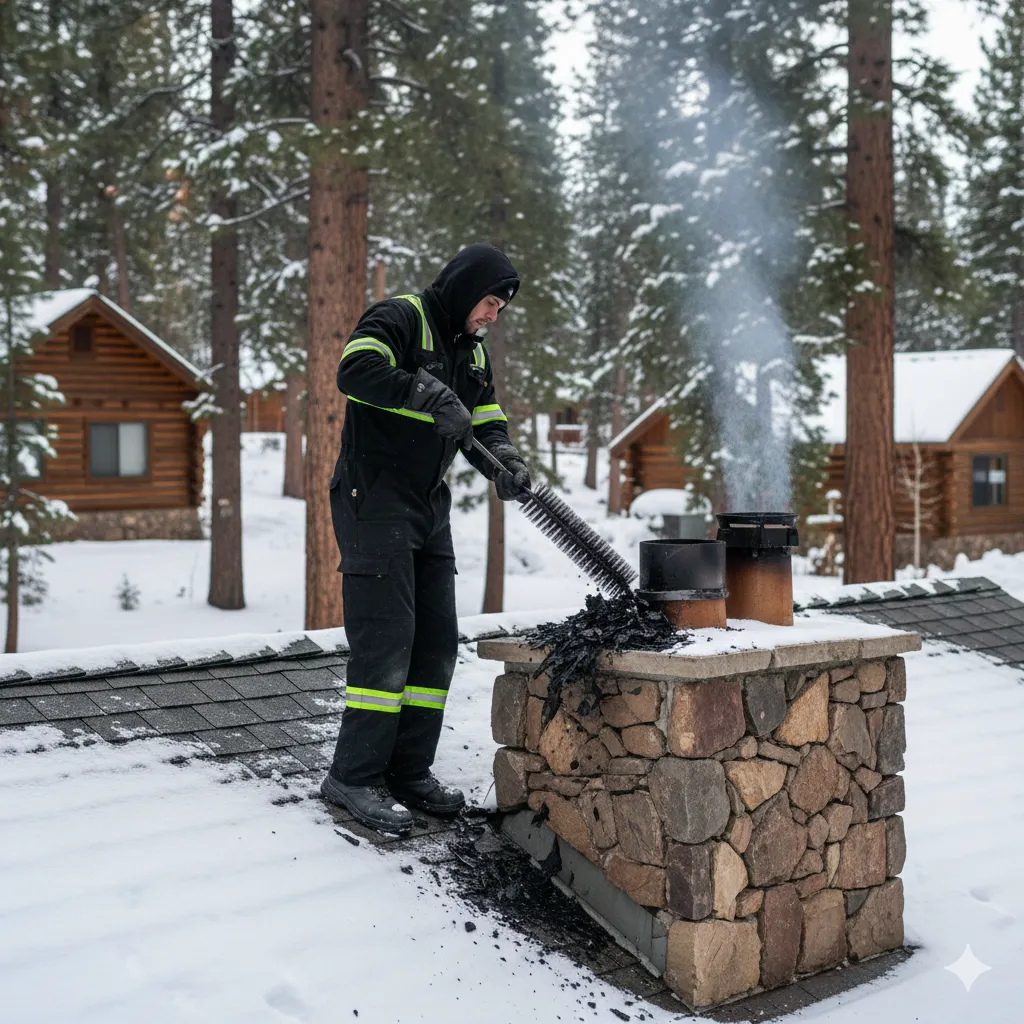
How Chimney Cleaning Prevents Fires
How Chimney Cleaning Prevents Fires
Chimneys are essential for venting smoke and gases safely, but without proper maintenance, they can become a serious fire hazard. The main culprit is creosote, a flammable byproduct of burning wood. Understanding how creosote forms and how chimney cleaning prevents fires is key for Big Bear homeowners and vacation rental owners.
What Is Creosote?
Creosote is a sticky, dark substance that accumulates inside chimneys when smoke cools and condenses on the flue walls. It’s highly combustible, and even a small spark or hot ember can ignite a chimney fire if buildup is left unchecked.
How Creosote Buildup Happens
Burning wet or unseasoned wood
Infrequent use of the fireplace, leading to cooler flue temperatures
Poor airflow or clogged chimneys
Over time, this residue can harden and form thick layers, increasing the risk of fire inside the chimney.
The Fire Risks of Neglect
A chimney fire can spread quickly, causing:
Structural damage to your home
Roof fires or interior damage
Smoke and soot damage inside living areas
Safety hazards for residents or guests
For cabins and vacation rentals in Big Bear, these risks are even higher due to frequent use during peak winter months.
How Chimney Cleaning Helps
Professional chimney cleaning removes creosote and other flammable buildup, reducing fire risk. Cleaning ensures proper airflow, improves combustion efficiency, and allows smoke to exit safely. A clean chimney also makes fireplaces more efficient, generating more heat with less wood.
Tips for Big Bear Homeowners
Schedule annual chimney inspections and cleanings, ideally before winter.
Only burn dry, seasoned wood to reduce creosote formation.
Avoid using fireplaces if you notice thick smoke, odors, or slow draft.
Install a chimney cap to prevent debris and animal entry.
The Bottom Line
Regular chimney cleaning is the most effective way to prevent fires and protect your Big Bear home. Removing creosote and debris not only safeguards your property and loved ones but also keeps your fireplace operating efficiently throughout the winter season.