
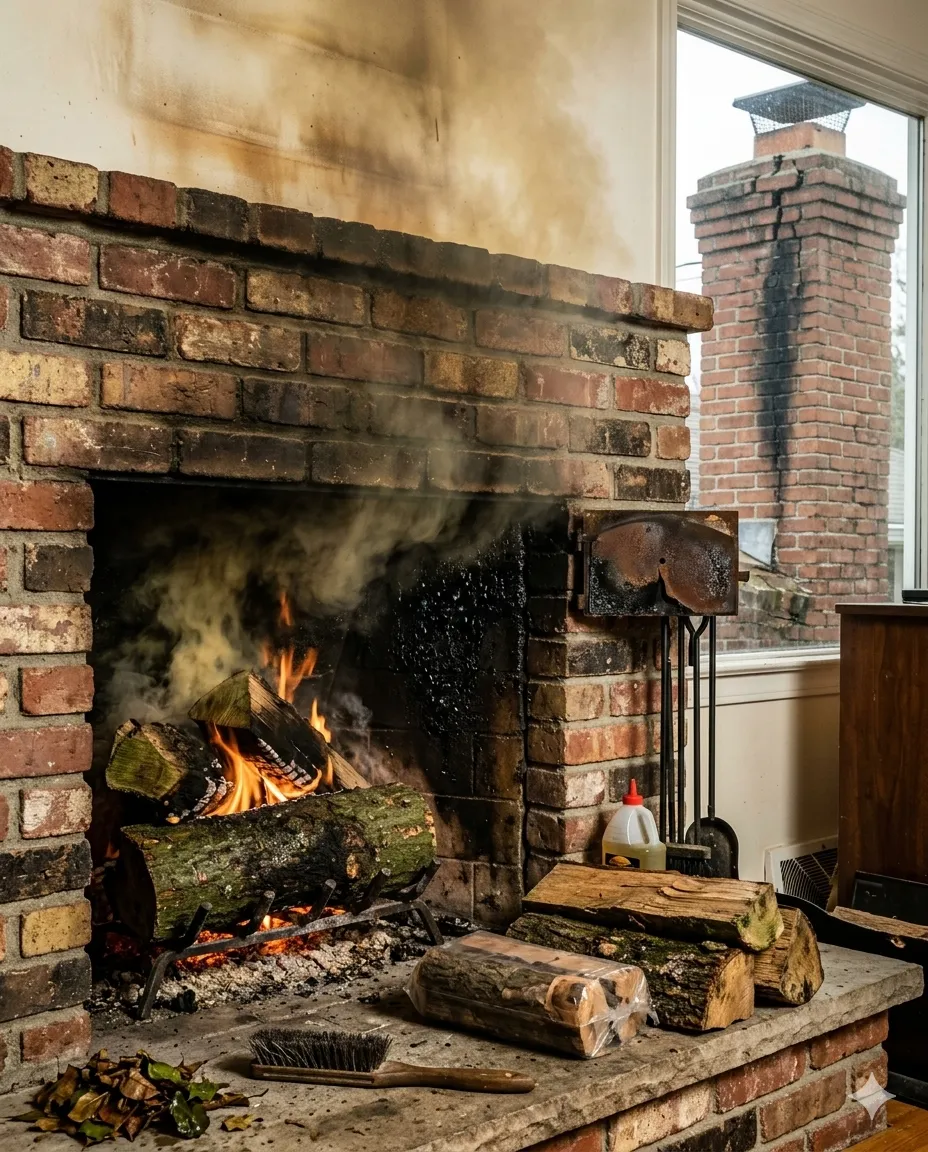
Fireplace Habits That Shorten Chimney Lifespan
Fireplace Habits That Shorten Chimney Lifespan
A fireplace can add warmth, comfort, and charm to a home, especially during colder months. However, many homeowners unknowingly develop habits that can accelerate chimney wear and lead to expensive repairs over time.
Your chimney works hard to safely vent smoke, gases, and heat away from your home. Without proper use and maintenance, everyday fireplace practices can contribute to creosote buildup, masonry deterioration, moisture damage, and other issues that shorten the life of the entire chimney system.
Here are some of the most common fireplace habits that may be damaging your chimney without you realizing it.
1. Burning Unseasoned or Wet Firewood
One of the biggest mistakes homeowners make is burning wood that hasn't been properly seasoned.
Wet or freshly cut wood contains excess moisture, which creates:
More smoke
Increased creosote buildup
Reduced heating efficiency
Greater chimney residue accumulation
Creosote is highly flammable and can contribute to chimney fires if left unchecked.
Better Practice
Burn only properly seasoned hardwood that has been dried for at least six to twelve months.
2. Ignoring Annual Chimney Inspections
Many homeowners assume that if their fireplace appears to function normally, their chimney must be in good condition.
Unfortunately, hidden issues often go unnoticed, including:
Cracked flue liners
Masonry deterioration
Blockages
Water intrusion
Structural damage
Better Practice
Schedule a professional chimney inspection annually, even if you use your fireplace only occasionally.
3. Skipping Regular Chimney Cleaning
Creosote and soot naturally accumulate over time.
When cleaning is neglected, buildup can:
Restrict airflow
Reduce fireplace performance
Increase fire risks
Accelerate deterioration inside the chimney
Better Practice
Have your chimney professionally cleaned according to usage levels and inspection recommendations.
4. Burning Improper Materials
Fireplaces are designed to burn natural firewood—not household waste.
Common materials that should never be burned include:
Cardboard with coatings
Treated or painted wood
Plastics
Trash
Magazines and glossy paper
These materials can release harmful chemicals and create excessive residue inside the chimney.
Better Practice
Burn only approved fireplace fuels and avoid using the fireplace as a disposal method.
5. Overloading the Fireplace
Building excessively large fires may seem like a way to generate more heat, but it can place unnecessary stress on the chimney system.
Large fires can contribute to:
Excessive heat exposure
Flue liner damage
Masonry cracking
Accelerated wear on chimney components
Better Practice
Maintain moderate, controlled fires that match the fireplace's intended capacity.
6. Neglecting Chimney Cap Maintenance
A chimney cap serves as the first line of defense against:
Rain
Snow
Debris
Birds and animals
When caps become damaged or are missing entirely, moisture and obstructions can quickly cause problems.
Better Practice
Inspect chimney caps regularly and replace damaged components promptly.
7. Closing the Damper Too Soon
Some homeowners close the fireplace damper immediately after a fire appears to be out.
However, lingering embers may still produce smoke and gases.
Closing the damper too early can:
Trap moisture
Increase residue buildup
Affect indoor air quality
Better Practice
Wait until all embers are completely extinguished before closing the damper.
8. Ignoring Water Damage Warning Signs
Water is one of the leading causes of chimney deterioration.
Signs of potential moisture problems include:
White staining (efflorescence)
Cracked mortar joints
Rusted metal components
Damp odors
Interior wall discoloration
Better Practice
Address moisture issues immediately before they lead to more extensive structural damage.
9. Using the Fireplace Infrequently Without Maintenance
Even rarely used fireplaces require maintenance.
Chimneys can develop issues from:
Weather exposure
Animal nesting
Debris accumulation
Aging materials
Better Practice
Include your chimney in routine home maintenance regardless of how often the fireplace is used.
10. Delaying Minor Repairs
Small chimney issues rarely stay small for long.
Minor concerns such as:
Loose mortar
Small cracks
Damaged flashing
Worn chimney crowns
can quickly worsen if left untreated.
Better Practice
Address repairs early to prevent larger and more expensive problems later.
How Proper Fireplace Habits Protect Your Chimney
Developing good fireplace habits can help:
Extend chimney lifespan
Improve fireplace efficiency
Reduce fire risks
Prevent water damage
Lower long-term repair costs
Maintain property value
A little preventative care goes a long way toward preserving both the performance and safety of your chimney system.
Final Thoughts
Many chimney problems begin with everyday fireplace habits that seem harmless at first. Burning wet wood, skipping inspections, neglecting cleanings, and overlooking small repairs can gradually shorten the lifespan of your chimney and lead to costly damage.
By practicing proper fireplace use and scheduling regular chimney maintenance, homeowners can protect their investment, improve safety, and enjoy years of reliable fireplace performance. Consistent care today can prevent major repairs and help keep your chimney functioning efficiently for the long term.